How to Get an ITIN: Requirements, Documents and Steps
What an ITIN is, who can apply, which documents you need, how to fill out Form W-7, how long it takes and what an ITIN can (and can't) do.
A step-by-step guide to your first U.S. tax return: the forms you need, how to file for free, deadlines and how to get your refund.
Your first tax return can feel intimidating: forms full of numbers, acronyms and the fear that any mistake will get you in trouble. But for most people with a regular job, it’s simpler than it looks — and it often ends with a refund.
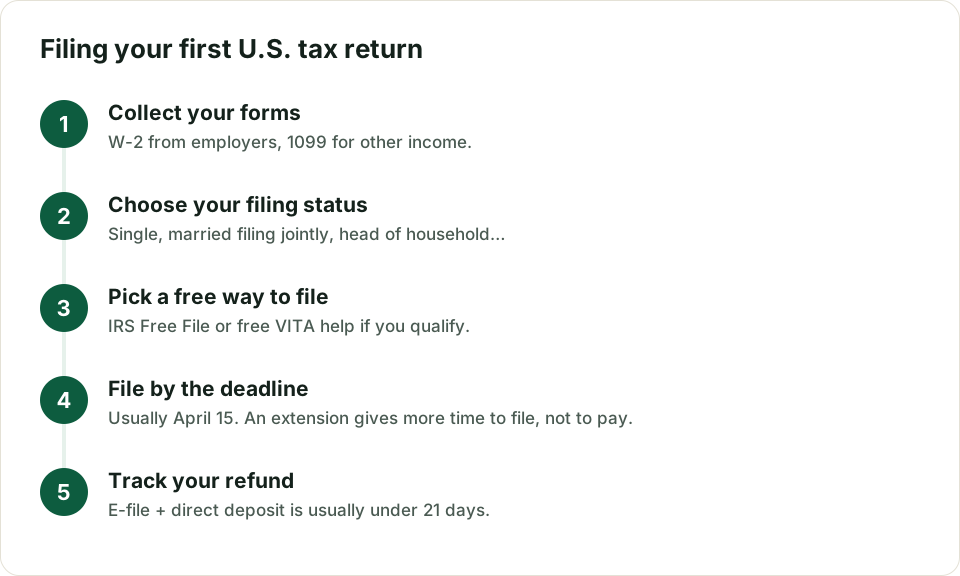
It depends on how much you earned, your filing status and your age. The IRS publishes the income thresholds every year. Some situations require filing even on low income — for example, if you were self-employed and had net earnings of $400 or more.
Tip: even if you’re not required to file, it’s worth filing if your employer withheld taxes. It’s the only way to get that money back as a refund.
It determines your tax rates and deductions. The main ones are:
Most people take the standard deduction: a fixed amount subtracted from your income with no need to document expenses. Itemizing only makes sense if your deductible expenses (such as mortgage interest or large donations) add up to more than that amount.
You don’t need to pay anyone for a simple return:
If you hire a preparer, make sure they have a PTIN (IRS preparer number), and never sign a blank return.
If you e-file and choose direct deposit, most refunds arrive in under 21 days. You can check the status with the “Where’s My Refund?” tool on IRS.gov.
What to do with your refund: it’s a great chance to start your emergency fund or pay down expensive debt.
What if I make a mistake on my return? You can fix it by filing an amended return (Form 1040-X). The IRS corrects many simple math errors itself and notifies you by letter.
Can I file without a Social Security Number? Yes, with an ITIN. In fact, an ITIN is usually requested together with your tax return.
What if I can’t pay what I owe? File on time anyway (the penalty for not filing is usually bigger than the penalty for not paying) and request a payment plan on IRS.gov.
This article is for educational purposes only and is not tax advice. Rules, thresholds and dates change every year; check IRS.gov or consult an authorized professional. Read our Disclaimer.
What an ITIN is, who can apply, which documents you need, how to fill out Form W-7, how long it takes and what an ITIN can (and can't) do.
How to use a 0% balance transfer card to pay off debt interest-free: fees, promo periods, traps to avoid and a worked example with $5,000.